 info@niagara-project.eu


Contaminants of emerging concern such as pharmaceuticals, industrial chemicals and microplastics are becoming an increasing challenge for drinking water treatment. Within the NIAGARA project, researchers are exploring how enzymes can help break down these pollutants.
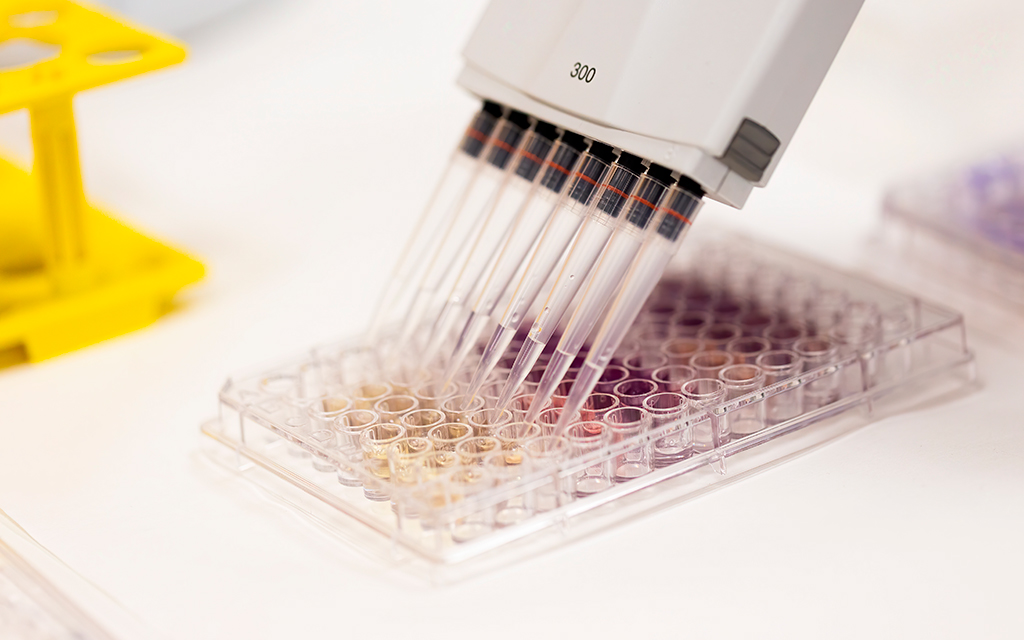
The challenge: emerging contaminants that are difficult to remove
From the medicines we take to the plastics we use every day, many human activities leave behind tiny chemical traces that eventually reach rivers, lakes and groundwater. These contaminants of emerging concern are often highly persistent and occur at concentrations that make them difficult to remove using conventional drinking water treatment technologies. As awareness of their potential impacts on ecosystems and human health grows, researchers are developing innovative approaches to remove these pollutants more efficiently (Ma et al., 2026).
Conventional treatment technologies are highly effective at removing many pollutants and ensuring safe drinking water. However, they were not originally designed to eliminate many of today's emerging contaminants, which often persist in water even at extremely low concentrations. Addressing these pollutants requires new treatment strategies capable of selectively targeting compounds that conventional processes may leave behind.
Nature's own catalysts
To tackle this challenge, researchers are turning to one of nature's most powerful tools: enzymes. Enzymes are proteins produced by all living organisms. Their role is to accelerate specific chemical reactions without being consumed in the process. You can think of them as highly specialised molecular tools, each designed to recognise and transform a particular type of compound.
Because of their specificity, enzymes are attracting increasing interest as a new tool for water treatment. Rather than simply trapping pollutants like a conventional filter, enzymes break them down by transforming them into different molecules through natural chemical reactions.
Since these reactions occur under mild conditions, they require less energy than many conventional treatment processes and can reduce the formation of unwanted by-products. This makes enzyme-based treatment a promising and more sustainable approach for removing emerging contaminants (Dong et al., 2023).
Why immobilise enzymes?
Using enzymes in water treatment presents one important challenge: once they are released into water, they can gradually lose their activity and are difficult to recover for reuse.
To overcome this limitation, researchers attach the enzymes to solid support materials in a process known as enzyme immobilisation. Instead of being washed away with the treated water, the enzymes remain fixed inside the treatment system while water flows over them.
- The enzymes can be reused many times.
- They remain stable for longer periods.
- They are easier to integrate into continuous water treatment systems.
- The process becomes more economically viable for large-scale applications.
Immobilisation has become one of the key strategies for bringing enzyme-based water treatment closer to real-world implementation (Zhou et al., 2021).
How NIAGARA is putting this into practice
Within the NIAGARA project, ITENE is developing an Immobilised Enzymatic Degradation System (IEDS) capable of removing both emerging chemical contaminants and micro- and nanoplastics from drinking water. The system combines different enzymes, each targeting a specific type of pollutant.
One group of enzymes used in NIAGARA is called laccases. These naturally occurring enzymes are capable of oxidising a wide range of organic compounds, transforming pollutants such as bisphenol A (BPA) and paracetamol into simpler and less harmful molecules.
The same treatment platform also targets plastic particles. For polyethylene terephthalate (PET), one of the world's most widely used plastics, NIAGARA employs enhanced polyester hydrolases. These enzymes gradually break the long polymer chains into their original building blocks, a process known as depolymerisation.
For other plastics, such as polyethylene (PE) and polypropylene (PP), complementary enzymatic strategies are being investigated. These approaches typically combine oxidative pretreatments with laccases and suitable mediator molecules, which facilitate the initial oxidation of the plastic surface and enhance its subsequent enzymatic degradation.
Although further validation is still needed before the technology can be deployed at large scale, NIAGARA is demonstrating how biotechnology could become an important part of future drinking water treatment.
References
- Dong, C.-D., Tiwari, A., Anisha, G. S., Chen, C.-W., Singh, A., Haldar, D., Patel, A. K., & Singhania, R. R. (2023). Laccase: A potential biocatalyst for pollutant degradation. Environmental Pollution, 319, 120999. https://doi.org/10.1016/j.envpol.2023.120999
- Ma, B., Qi, J., Dong, H., Yu, H., Lu, C., Sun, M., & Hu, C. (2026). Risk control technologies for emerging contaminants in drinking water: A review and perspective. Fundamental Research, 6(2), 620–635. https://doi.org/10.1016/j.fmre.2026.01.007
- Zhou, W., Zhang, W., & Cai, Y. (2021). Laccase immobilization for water purification: A comprehensive review. Chemical Engineering Journal, 403, 126272. https://doi.org/10.1016/j.cej.2020.126272