 info@niagara-project.eu


Researchers at ICN2 have developed a multiplexed nanophotonic biosensor platform capable of detecting up to seven targets simultaneously with high sensitivity. Read more.
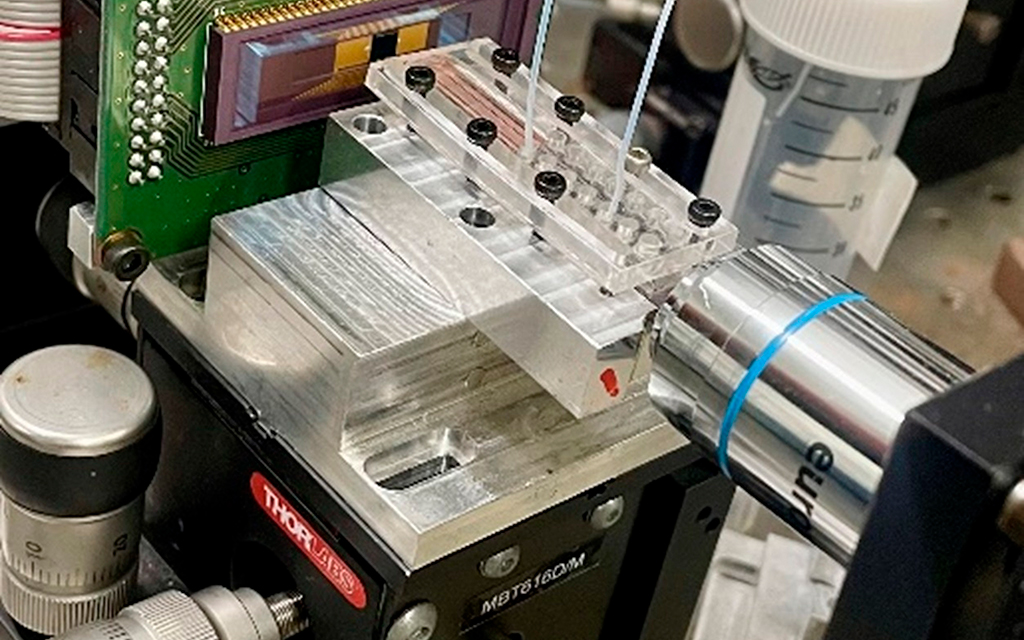
Tackling one of biosensing's biggest challenges
Photonic biosensors have become increasingly powerful tools for detecting biological and chemical substances quickly and with high sensitivity. However, extending these systems from analysing a single target to detecting multiple biomarkers simultaneously has remained a technological challenge. Developing a multiplexed biosensor requires much more than adding additional sensing elements. It demands efficient light distribution across multiple sensors, reliable signal acquisition, precise sample handling through microfluidics, and careful management of optical interference between sensing channels.
The Nanobiosensors and Bioanalytical Applications research group at the Catalan Institute of Nanoscience, one of the partners involved in NIAGARA, has published a new scientific article presenting an innovative multiplexed nanophotonic biosensor platform capable of simultaneously detecting multiple targets while maintaining exceptional sensitivity.
From a single sensor to a multiplexed platform
Building on their previous work on interferometric photonic sensors, the team has developed a novel configuration capable of monitoring up to seven sensing waveguides simultaneously in real time, significantly expanding the multiplexing capabilities of the platform for multi-analyte detection.
The system integrates several key technological innovations into a compact prototype, including:
- a CMOS-compatible nanophotonic chip with on-chip beam splitting for parallel light distribution;
- a custom silicon photodetector array capable of simultaneously reading eight interferometers (seven sensing channels plus one reference);
- a dedicated microfluidic system that delivers samples uniformly across all sensing channels; and
- integrated electronics for real-time multi-signal acquisition and processing.
High performance without compromising sensitivity
One of the most significant achievements reported in the study is that multiplexing does not come at the expense of performance.
The prototype demonstrated extremely low signal noise and achieved a bulk limit of detection of (7 ± 5) × 10⁻⁷ RIU, matching the sensitivity previously obtained with single interferometric sensors. This confirms that the platform can be successfully scaled while maintaining the high analytical performance required for demanding biosensing applications.
To validate the platform, the researchers performed simultaneous detection of Respiratory Syncytial Virus (RSV) nucleoproteins across all seven sensing channels. The biosensor delivered rapid measurements in less than nine minutes, showed excellent reproducibility between sensors, and reached an average detection limit of 1.2 ± 0.4 ng/mL, demonstrating the robustness and sensitivity of the integrated system.
Supporting the goals of NIAGARA
Although the study demonstrates the platform using viral biomarkers, its potential extends well beyond clinical diagnostics.
The scalable prototype presented in this publication provides an important technological foundation for these efforts, bringing researchers closer to compact devices capable of rapidly analysing multiple targets from a single sample.
As highlighted by the authors, future work will focus on selectively functionalising each sensing channel with different recognition bioreceptors, enabling the simultaneous detection of multiple different analytes on the same chip. This capability would further expand the platform's potential for complex bioanalytical applications, including environmental monitoring and water quality assessment.
Read the full publication.